We will be studying the industry and audience contexts for this topic and need to cover two CSPs:
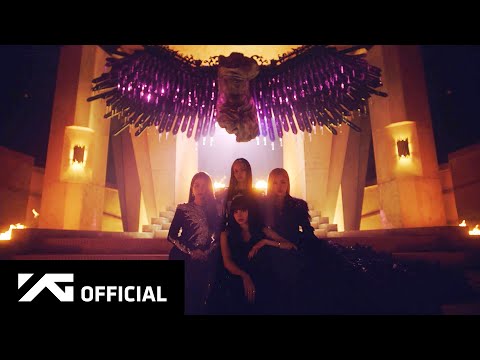
BLACKPINK: How You Like That
Arctic Monkeys: I Bet You Look Good On The Dancefloor
We need to study the industry and audience contexts for these products:
Industry: how music video is produced and marketed and how this has changed over time.
Audience: Target audience and audience pleasures. How music contributes to an audience's sense of identity. Fandom. How the internet has changed the position of the audience.
PLUS: Historical, cultural and social significance of the music videos and the impact of the internet on the music industry.
Music video will appear in Paper 1, Section B of Exam
Section B is only on INDUSTRIES and AUDIENCES and will consist of:
4) How do BLACKPINK and K-pop show that the media and music industries are now global?
Extension Tasks (Choose 1/2)
Read this Guardian feature asking whether YouTube is good or bad for the music industry. What is your opinion on this crucial question?
Read this Guardian feature on how videogames are now more important than music videos for breaking new artists. Do you agree videogames are now more influential than music videos?
Complete for homework if you don't finish it in the lesson - due date on SatchelOne.
We need to study the industry and audience contexts for these products:
Industry: how music video is produced and marketed and how this has changed over time.
Audience: Target audience and audience pleasures. How music contributes to an audience's sense of identity. Fandom. How the internet has changed the position of the audience.
PLUS: Historical, cultural and social significance of the music videos and the impact of the internet on the music industry.
Music video will appear in Paper 1, Section B of Exam
Section B is only on INDUSTRIES and AUDIENCES and will consist of:
- 1 short answer question
- 2 medium answer questions – one on audience, one on industry
- 1 extended essay style question on one of the media forms we have studied - which is very likely to be Music Video due to the advance information we have from AQA about the Summer 2022 exams.
- This essay question will require you to make judgements and draw conclusions.
Music Video: Introduction and History
Music Video Key Conventions
Music videos typically feature movement – often fast paced either in terms of actors, camerawork or editing. Many contain a performance element or narrative. Music videos can also feature visual effects and intertextuality.
Music videos were originally designed as a promotional device to sell the band or artist’s music but have developed over time to become a recognised artform or product in their own right. Modern music videos no longer have the huge budgets of the 1980s and 1990s but digital media means they are now more accessible than ever. Videos such as Psy’s Gangnam Style have received over 3 billion views on YouTube.
Intertextuality
Intertextuality is when one media text references another media text – through genre, conventions, mise-en-scene or specific cultural references.
Music videos often use intertextual references – often to classic films but also to television, popular culture, news, videogames or even other music videos.
Intertextuality
Intertextuality is when one media text references another media text – through genre, conventions, mise-en-scene or specific cultural references.
Music videos often use intertextual references – often to classic films but also to television, popular culture, news, videogames or even other music videos.
Music Video History
Originally, music videos were made like mini ‘films’ of the bands performing (e.g. The Beatles, Elvis)
MTV was launched in 1981 as a platform for music videos and the first music channel on television. Programs such as BBC show Top of The Pops also showcased music videos from the charts alongside ‘live’ stage performances.
In the 1980s and 1990s big budgets were spent on producing innovative and creative music videos such as Michael Jackson’s Thriller that had a film narrative, a well known director and featured intertextuality (horror films)
Music Video in the Digital Age
In 2005 the launch of YouTube changed the way that consumers access and enjoy music video. Now self-promotion is more common.
The rise of new and digital media paved the way for bands such as One Direction ‘manufactured’ by the industry and increasingly promoted through convergence on social media to maximise profits for the record companies.
Problems With Piracy
Problems With Piracy
Piracy became a huge problem for the music industry as they could not keep up with illegal downloading and streaming services where fans shared content for free therefore… The 2000s saw the rise of streaming services with subscriptions such as Spotify, Apple Music, Beats Music and (most recently) Youtube Music.
New platforms and music apps on smart phones mean that listeners are now becoming one-device consumers and using their phones for all media access.
Our First Music Video CSP is BLACKPINK - How You Like That.
This 2020 video promoted the lead single from Blackpink’s first Korean-language studio album, The Album. The video, released on 26th June 2020, was premiered on Blackpink's YouTube channel at the same time as the single was released.
The video broke many YouTube records, including most-watched premiere (1.66 million concurrent viewers), most views within 24 hours for a music video (86 million views) and fastest video to achieve 100, 200 and 600 million views. It was the 3rd most viewed music video of 2020. As of Autumn 2021, the video has had over 1 BILLION views.
K-Pop: Global Phenomenon
The K-pop genre reflects the global nature of the media and music industries. Over the last 20 years, K-pop has become a cultural sensation as groups like BTS and BLACKPINK enjoyed global success. This has also resulted in Korean culture becoming mainstream in the West.
Audience
BLACKPINK’s Audience: Blinks
BLACKPINK fans are known as ‘Blinks’ and are largely teenage girls and young women. Their fans are worldwide but they are particularly big in the Philippines and Indonesia as well as western countries such as the UK and USA.
Avril, a 16-year-old Blink (Blackpink’s fandom name) from Peru discovered them in 2018. “Everything about them made me become a fan,” she tells Vogue over Twitter. “The way they perform, their iconic songs and choreos, their friendship, even the way they dress. Blackpink were on a whole new level.”
Audience Pleasures
Applying Blumler and Katz Uses and Gratifications theory:
- Diversion: Music video conventions – performance, effects, fast pace etc.
- Personal relationships: Fan interaction online through social media is a key element of K-pop’s global success. Fans feel like they ‘know’ the band members.
- Personal identity: K-pop fandom often involves copying the look of band members and seeing their own style reflected on screen.
- Surveillance: Western audiences gain knowledge of Korean music and culture.
Marketing and Promotion to the Audience
The video’s release was preceded by a series of teasers on the band’s social media accounts (including posters, photos focusing on individual band members and videos) and a reality show (24/365 with Blackpink, available on YouTube).
A “dance performance” video including the choreography for the music video was released in July 2020; by March 2021 this had achieved over 600 million views and was placed in the top 20 videos of the year by Billboard magazine.
Dance performance:
BLACKPINK 24/365 - Behind the scenes of the How You Like It music video shoot:
Industries
BLACKPINK: Manufactured by YG Entertainment
Blackpink was formed in 2016 by Korean entertainment company YG Entertainment and by 2020 was one of the most successful K-Pop bands in the world. As of 2021, the band was the most followed girl group on Spotify and the most-subscribed music group, female act, and Asian act on YouTube.
The Changing Nature of the Music Industry
How You Like That demonstrates the changing nature of the music industry and how important YouTube and social media has become for music artists.
The way people consume music videos has changed – now phones, tablets and YouTube are the primary ways audiences engage with music videos (known as convergence). It also shows music video has become a media form in its own right, not just a way to sell an album.
BLACKPINK’s billions of YouTube views also bring in money through advertising.
Music: A Global Industry
K-pop demonstrates the global nature of the industry with BLACKPINK selling out arenas across the UK and USA as well as in the East. They played Wembley Arena in 2019 as well as huge US music festival Coachella.
Music Videos: Regulation
With music videos now largely consumed on YouTube, regulating the content of music videos is very difficult. Some UK-based record companies get their music videos rated by the British Board of Film Classification (BBFC).
The kinds of issues the BBFC considers in classifying music videos include bad language, dangerous behaviour presented as safe, drug misuse, sexual behaviour and nudity, and threatening behaviour and violence.
Introduction to Music Video and BLACKPINK HYLT: Blog tasks
Introduction Q's:
1) What are the key conventions of music video?
2) What is intertextuality?
3) When did music videos first become a major part of the music industry?
4) What launched in 1981 and why were music videos an important part of the music industry in the 1980s and 1990s?
5) How are music videos distributed and watched in the digital age?
Introduction Q's:
1) What are the key conventions of music video?
2) What is intertextuality?
3) When did music videos first become a major part of the music industry?
4) What launched in 1981 and why were music videos an important part of the music industry in the 1980s and 1990s?
5) How are music videos distributed and watched in the digital age?
BLACKPINK: How You Like That Q's:
Audience
1) What are BLACKPINK fans known as - and what would the demographics / psychographics be for the BLACKPINK audience?
2) What audience pleasures are offered by the music video for How You Like That?
3) Pick out three particular shots, scenes or moments in the video that would particularly appeal to BLACKPINK fans. Why did you choose those moments?
4) How was the How You Like That music video marketed and promoted to the audience?
1) What are BLACKPINK fans known as - and what would the demographics / psychographics be for the BLACKPINK audience?
2) What audience pleasures are offered by the music video for How You Like That?
3) Pick out three particular shots, scenes or moments in the video that would particularly appeal to BLACKPINK fans. Why did you choose those moments?
4) How was the How You Like That music video marketed and promoted to the audience?
5) Why is K-pop a global phenomenon and what has helped it to become so popular?
Industry
1) How were BLACKPINK formed and what records have they broken?
2) What other successful artists have YG Entertainment created? You may need to Google this.
1) How were BLACKPINK formed and what records have they broken?
2) What other successful artists have YG Entertainment created? You may need to Google this.
3) How has technology and the internet (known as technological convergence) changed the way audiences consume music videos?
4) How do BLACKPINK and K-pop show that the media and music industries are now global?
5) How are UK-based music videos regulated and what types of content require warnings?
Extension Tasks (Choose 1/2)
Read this Guardian feature asking whether YouTube is good or bad for the music industry. What is your opinion on this crucial question?
Read this Guardian feature on how videogames are now more important than music videos for breaking new artists. Do you agree videogames are now more influential than music videos?
Read this fantastic Guardian feature on K-Pop in 2025 and its struggles with globalisation and falling between a Korean and a western audience. How do BLACKPINK and our CSP fit into this picture of a struggling industry?
Read this Guardian review of BLACKPINK's album. What does the writer say about the band and songs?
Read this Variety feature on a controversy that offended some global fans of BLACKPINK. What was the problem and how did they respond?
Read this Teen Vogue feature on the music video release of How You Like That. How else did the group promote the release of the song?
Here's another Teen Vogue feature offering a brief history of K-Pop. How did the genre go global?
Finally, read this excellent Medium blog on the future of the music video in the digital age. Summarise the main points of the blog in 100 words.
Read this Variety feature on a controversy that offended some global fans of BLACKPINK. What was the problem and how did they respond?
Read this Teen Vogue feature on the music video release of How You Like That. How else did the group promote the release of the song?
Here's another Teen Vogue feature offering a brief history of K-Pop. How did the genre go global?
Finally, read this excellent Medium blog on the future of the music video in the digital age. Summarise the main points of the blog in 100 words.
Complete for homework if you don't finish it in the lesson - due date on SatchelOne.