Monday, 5 December 2022

Film Industry: Black Widow

Our first Film Industry CSP is Marvel blockbuster Black Widow.

For film, we only need to study the industries key concept - so this means the companies behind the film, the budget, the marketing and promotion and finally the box office success.

Reminder: industry terminology

In our Introduction to Media unit, we learned a range of media industries terminology that we may well be tested on in the exam. Make sure you know the following:

Conglomerate
Most major media companies are conglomerates that own a range of smaller companies (called subsidiaries). An example of this is Disney owning Marvel.

Vertical integration
Vertical integration is when one conglomerate owns different companies in the same chain of production. E.g Disney owns film studios, CGI specialists, film distributors and TV channels such as the Disney Channel. This gives Disney the chance to make money at every stage of production. Complete ownership = more profit.

Horizontal integration
Horizontal integration is when one company buys other companies at the same level of distribution. E.g Facebook acquired Instagram in 2012 (at a cost of $1 billion) so that they could cancel out the competition by making money from both. Horizontal integration allows companies to widen their audience and find other ways to make money.

Convergence, branding and synergy 
Convergence refers to the way we can now access everything about a film - reviews, trailers and even watching the film itself - using our phones. Branding and synergy is when a company creates a brand that can be used across different media products and platforms. E.g Disney makes movies but then also has related stage shows, theme parks, merchandise, soundtracks and events.


Black Widow notes

Black Widow is the 24th entry in the Marvel Cinematic Universe (MCU). It raises many industry issues surrounding the production, distribution and exhibition of film in the digital age.  

Film franchise

A film franchise is a series of films or multi-picture stories, often including some of the same characters from film to film.

Franchises have become even more important than individual stars. They consist of connected universes (e.g. Star Wars, Marvel's Cinematic Universe, DC Extended Universe etc) and many sequels (or prequels).

Blockbuster movies

Black Widow is a blockbuster movie. A blockbuster is a major studio movie that's made with a large budget, big stars and often involves a franchise. 

A true blockbuster is extremely popular and brings in a lot of money. Typically, a blockbuster is a summer movie that audiences line up to see the first weekend it's released (which coincides with the school holidays and more family time).

Disney and Marvel

In 2009, The Walt Disney Company acquired Marvel Entertainment for US$4 billion. The Walt Disney Company now owns Disney Pictures, Marvel Studios, Lucasfilm and Pixar.

Walt Disney Studios are one of Hollywood's major film studios and generated an income of $2.4 billion in 2017.  This means that they can afford to make more expensive films, market them around the world at great expense and ensure that they are hugely profitable.  

Marketing and promotion

Star Power implies that people will want to see a film with a certain star in it. Most mainstream films and blockbusters will use Star Power to attract audiences to their film. The main star in Black Widow is Scarlett Johansson who is very well known and has established fans. 


Walt Disney Studios had a huge budget to make and market Black Widow although the success of the film was badly affected by the Covid-19 pandemic closing cinemas. Some of the strategies used included:
  • Traditional methods such as posters and teaser trailers on TV and in cinema.
  • Stars of the film appeared on a range of TV chat shows and press events. 
  • Film trailers were released on YouTube and in cinemas. 
  • Specific IMAX promotions with 22 minutes of the film shot in 1.90:1 aspect ratio especially for IMAX cinemas.
  • Section of the Marvel website with gallery, story synopsis, character posters and opportunities to buy or stream the movie.
  • Social media profiles on TikTok, Instagram, Twitter and Facebook. Social media and YouTube advertising was also heavily used by Marvel to promote the film including using tweets from audience members on massive billboards.
Star interviews and TV appearances:


Specific IMAX promotional videos:


The Covid-19 pandemic has had a huge impact on the film industry and changed the release strategy for many films. While cinemas are still the primary way of making money for the film industry, some movies are being released to streaming services alongside cinema - or bypassing cinema altogether. Watch this report on Black Widow with an interview with IMAX CEO Richard Gelfond:

Social media marketing

The film used tweets from audience members to help promote the film:


Was the film a global box office hit?

Black Widow’s success is difficult to judge due to the Covid-19 pandemic.

Black Widow’s budget was $200m and it only made $379m at the worldwide box office due to the pandemic. Marvel would have spent well over $100m on marketing the film globally so the profit level is very low. Most Marvel films have made around $1 billion at the box office. 

However, this doesn’t take into account revenues through Disney+ so Black Widow may well still make Marvel and Disney a profit in the end.


Film industry: Regulation

Films in the UK are regulated by the British Board of Film Classification (BBFC).

Black Widow was awarded a 12A by the British Board of Film Classification (BBFC).  It was deemed to have “moderate violence, injury detail”, yet was not too graphic.

With a 12A, no-one under the age of 12 can see the film unless accompanied by an adult. It is quite a new classification (1989)  and was introduced due to the large gap between PG and 15.

It is important that all MCU films are 12A at the most as the major film companies want to keep the young audience for:
  • Merchandising opportunities.
  • Better potential box office.
  • 47% of cinema audiences were aged 7-24 in the UK in 2014.  Word of mouth and peer influence is important in generating interest.

Black Widow: blog tasks

1) List the companies involved in the creation of Black Widow. You may wish to use Black Widow's IMDB entry to help with this - see the company credits page - but the answers can also be found above.

2) What is conglomerate ownership and how does it link to Black Widow?

3) Analyse the film trailer for Black Widow. What aspects of the trailer tell you this is a big-budget blockbuster movie?

4) How was Black Widow promoted to an audience? List at least three different methods used by the film's marketing campaign and why they were effective in promoting the film.

5) What was the production budget for Black Widow and how much did it make at the box office?

6) Would you consider Black Widow a successful Hollywood blockbuster? Why?

7) Who regulates the film industry in the UK?

8) What age rating was Black Widow given? Why?

Grade 8/9 extension tasks

If you want a top grade in Media, you should also complete the grade 8/9 extension tasks once you've completed the basic eight questions above. Try the following:

1) Read this Guardian report on Scarlett Johansson suing Disney over the release strategy for Black Widow. Do you agree she is right to be angry with the multiplatform release strategy?

2) Read this feature on how Black Widow shot 22 minutes of IMAX footage to give viewers an incredible widescreen experience in IMAX cinemas. Why is IMAX an important part of marketing a blockbuster movie?

3) Look at the Marvel Black Widow website. What promotional devices do Marvel put on the website to promote the film?

4) Read this feature on Marvel using a fan's tweet to help market the film. Why is audience interaction such an important aspect of modern film marketing?

5) Look at this Guardian website page allowing Marvel fans to discuss Black Widow. What interesting opinions do you notice in the comments? 

Finally, you might want to read this feature on whether there are too many Marvel sequels and spin-offs. Do you agree that there are too many Marvel films?

Complete for homework what you don't finish in the lessons - due date on Google Classroom.

Monday, 28 November 2022

Film Industry: Marketing - Marvel Cinematic Universe

Our first exam Close-Study Products will be from the Film Industry.

In our lesson, we learned the importance of film marketing and what a risky business it is for film studios. 

The two Close-Study Products (CSPs) we'll be studying for the Film Industry are:
  • Black Widow (2020)
  • I, Daniel Blake (2016)

A summary of the notes from our research activity:

Risky business
The creative industries are a risky business for companies - it costs a huge amount of money to create a media product like a film and there's no guarantee the audience will like it.

No brand loyalty
A new, original film has no established brand or audience - it has to generate all the interest through marketing. This is why film companies prefer to make sequels, reboots or films from an established franchise (like the Marvel Cinematic Universe) - there is an existing audience ready to buy the product. 

Star power
If the film isn't from an existing franchise, film studios use star actors or directors to help generate interest in the film and find an audience. Star directors like veteran political filmmaker Ken Loach have an established audience that will always watch his films regardless of subject matter.

A matter of timing
Marketing campaigns need to be carefully timed to create excitement about the film's release. Often, the first teaser trailers will drop up to a year before release - particularly for established franchise films like the Marvel Cinematic Universe.

Social media marketing
Once the film is out, the marketing campaign has less power - because audience word-of-mouth will take over. In the digital age, people will post online about the film immediately after seeing it - which means word-of-mouth is more important than ever. 

Why does Hollywood keep making sequels?


Film Industry: Marvel Cinematic Universe blog tasks

Read this BBC article on the Marvel Cinematic Universe and answer the following questions based on the article:

1) How many films were there in the Marvel Cinematic Universe (MCU) at the time of this article?

2) How much money have the MCU films made in total according to this article?

3) Why did Marvel create the Avengers films?

4) Who owns the rights to Spiderman and why is the character now appearing in Marvel films?

5) Which company owns the rights to the Fantastic Four and the X-Men?

6) Look at the very end of the article. What has Disney announced regarding TV shows on their new streaming service Disney+?

Grade 8/9 extension tasks

Read this Guardian review of Black Widow to prepare for studying our first CSP. What did the Guardian think of the film?

Read this BBC feature on Marvel at 80 years old. How has it survived so long and why is the Marvel Cinematic Universe so important to the recent success of the brand?

Complete for homework if you don't finish in the lessons - due date on Google Classroom.

Monday, 21 November 2022

Industries: Ownership and control

Most media companies are owned by one of the big six - massive conglomerates that dominate the media industry.

As GCSE Media students, we need to learn how media companies are bought, sold and controlled.

Notes

Industries: recap

Industries are the producers, the companies that produce (make) and distribute the media product. 

Industries have a strong interest in who their Target Audience is so that they can best appeal to them. 

Some companies dominate the industry which means they own more of the content and therefore make more money (revenue).


Vertical integration

Vertical integration is when one conglomerate owns different companies in the same chain of production.
E.G Disney owns film studios, CGI specialists, film distributors and TV channels such as the Disney Channel. This gives Disney the chance to make money at every stage of production. Complete ownership = more profit.


Horizontal integration

Horizontal integration is when one company buys other companies at the same level of distribution.

E.G Facebook acquired Instagram in 2012 (at a cost of $1 billion) so that they could cancel out the competition by making money from both.
Horizontal integration allows companies to widen their audience and find other ways to make money.


Synergy

Synergy is when a company creates a brand that can be used across different media products and platforms.
E.G Disney makes movies but then also has related stage shows, theme parks, merchandise, soundtracks and events.


Ownership and control: blog task

Create a new blogpost called Industries: Ownership and Control. Read this article about Facebook’s acquisition of Instagram and complete the tasks below:

1) Why did Facebook buy Instagram for $1bn in 2012?

2) What are the benefits for media companies of vertical integration?

3) What are the benefits for media companies of horizontal integration?

4) What is a subsidiary?

5) Give three examples of media companies that have used synergy to maximise the profit from a brand (there is one above to help you).

6) Read this BBC article on Disney buying 21st Century Fox. List 10 companies that are part of the Disney media empire. This graphic may help you: 

7) Why did Disney buy Fox - what are the benefits?

If you don't finish these questions in the lesson, complete for homework - due date on Google Classroom.

Sunday, 13 November 2022

Audience: Effects theory

As well as studying target audience and reception theory, we also need to explore WHY audiences enjoy using and interacting with the media and what effect the media has on them.

This means learning a range of audience theories to add to our work on Stuart Hall's Reception theory. 

Audience theory: key notes and terminology

Passive & Active

Passive: This is the view that audiences passively take in information from the media and that these messages have the same effect on everyone.

Active: This is the more modern and generally accepted view that audiences interact with and make conscious choices regarding the media they consume.


Hypodermic Needle Theory

This is the suggestion that audiences are always passive and therefore take the intended message from the producer as if it was injected into their minds. This assumes no individual difference in audience members. 


Two-step flow theory

This is the theory that consumers form their opinions based on opinion leaders like newspapers, politicians and, nowadays, celebrities.


Uses and Gratifications - Blumler & Katz

INFORMATION/SURVEILLANCE: learning information that you did not already know or that is useful for living (e.g. documentaries; weather or traffic). 
IDENTITY: personally relating to something - seeing your lifestyle on screen.
DIVERSION/ENTERTAINMENT: escapism and being entertained away from your normal life.
RELATIONSHIPS: social interaction, caring about characters or celebrities, forming relationships e.g watching a soap opera for a long time because you care about what happens to long-standing characters.


The 3 Vs

VISCERAL PLEASURE: Physical thrill of watching something e.g hairs on the back of your neck in a horror film, sport, big explosions. 
VICARIOUS PLEASURE: Experiencing something through the characters. 
VOYEURISTIC PLEASURE: Watching people e.g hidden camera shows / elements of reality TV like Big Brother.


Audience effects theory: blog tasks


Create a new blogpost called ‘Audience Effects Theory’ and complete the following tasks:

1) Write a definition of a passive audience: 

2) Write a definition of an active audience: 

3) Write a definition of the hypodermic needle theory: 

4) Write down a media product (e.g. TV show, newspaper or videogame) for each category of Blumler and Katz's Uses and Gratifications theory and WHY it fits that particular audience use/gratification. The first one is done for you: 

INFORMATION/SURVEILLANCE: The Times newspaper
 > Why: It tells audiences important information about politics, the world and more.
PERSONAL IDENTITY:
 > Why:  
DIVERSION/ENTERTAINMENT: 
 > Why:
RELATIONSHIPS:
 > Why: 

5) Re-watch the clip from Blue Planet above and write a paragraph analysing how elements of the clip offer the audience pleasures or gratifications (use media terminology from Uses and Gratifications theory and the 3 Vs - notes outlined above). 

Extension: To take this further, select a media text of your own choice, embed it in your blog and write another detailed paragraph analysing the audience pleasures in that product.


Extension question 2: Think about the hypodermic needle theory. Do you think most audiences believe everything they see in the media? Why? Explain your answer and try to argue both sides.

Finish for homework if you don't complete it in the lesson - due date on Google Classroom.

Sunday, 6 November 2022

Audience: Reception theory

Reception theory is an important media theory exploring how audiences respond to media texts.

Stuart Hall is a cultural theorist who looked at the relationship between the text and the audience. He suggested that meanings are fluid and open to interpretation depending on context and the consumer’s experiences as individuals as well as communities.

Hall states there are three readings to any media text:

Preferred reading
The meaning the producers intend to communicate. This builds on the idea that producers can position the audience in a certain way and influence their reading so they accept the intended message by using recognised codes and conventions (such as stereotypes).

Negotiated reading
Somewhere between the preferred and oppositional reading. The message is modified (partly accepted and partly rejected) depending on the individual experiences of the audience (e.g their age, gender or social class).

Oppositional reading
The oppositional reading goes against the meaning the producers are trying to create. The audience reject the intended message and construct an opposite reading instead. This can be due to their own social, political or moral beliefs and values. 


Reception theory: blog task

Create a new blogpost called 'Reception theory'.

1) What is the preferred reading of a media text?

2) What is the oppositional reading of a media text?

Re-watch the trailer for the film Harry Brown:


3) How does the Harry Brown trailer position the audience to respond to the teenage characters in the film?

4) Why might young people reject this reading and construct an oppositional reading of the trailer?

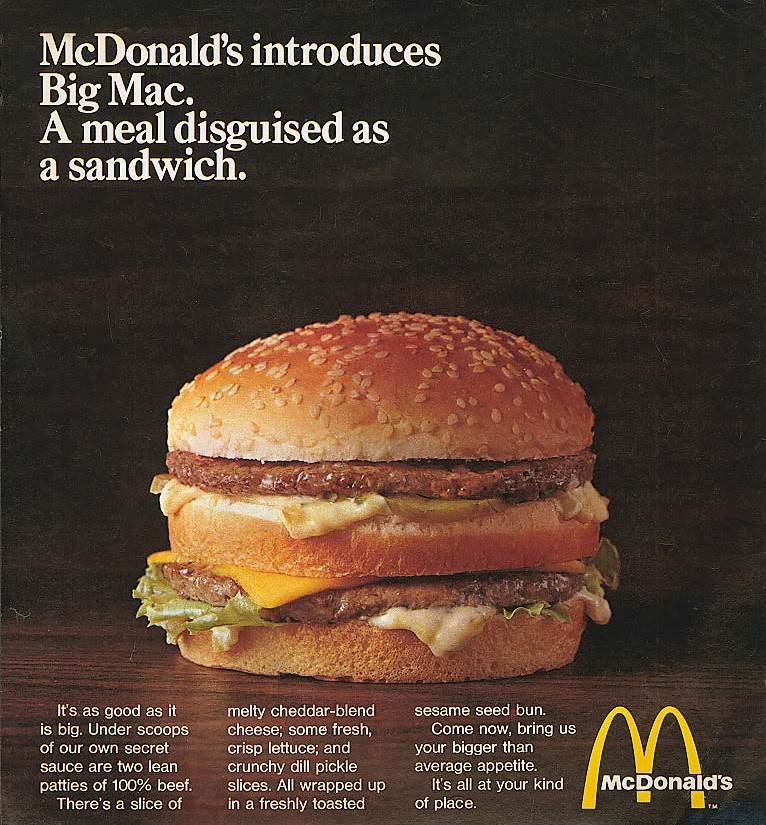
Look at this McDonald's advert:


5) Write a 150+ word analysis of the McDonald's advert using preferred, negotiated and oppositional readings.


Grade 8/9 extension tasks: 

Find your own advertisement and write a 150+ word analysis using preferred, negotiated and oppositional readings.


Watch the rest of the Plan B TEDx lecture about his plan to help disadvantaged young people through film and music. Do you agree that he presents a positive view of young people?

Finish for homework if you don't complete this during this week's lessons - due date on Google Classroom.
Monday, 31 October 2022

Demographics and Psychographics

The first aspect of the Audience key concept we need to study is how media companies target and classify audiences.

In order to do this, we need to learn about audience demographics and psychographics. These are two crucial aspects of how audiences are classified and identified by media companies. 

Notes from today's lesson on Audience

Demographic classification:
  • Age
  • Gender
  • Education
  • Social class
  • Race/ethnicity
  • Job/profession/earnings
  • Home (city/village/countryside)

Social class classification
Advertisers have traditionally classified people into the following groups:
  • AB – Managerial and professional 
  • C1 – Supervisory and clerical 
  • C2 – Skilled manual 
  • DE – Unskilled manual and unemployed


Audience profiling

Advertisers these days are interested in more than just a social class classification. Now they try to sell a brand or lifestyle and therefore need to know more about their audience than simply age, gender or where they live.

So we also need to think about the kind of brands audiences are interested in and what this says about their lifestyle and interests. Is this product aimed at people who buy Armani and Porsche? Banana Republic and Apple? John Lewis and The Times? Lush and the Vegan Store? Peppa Pig and Haribo? The brands we buy or like say a lot about our personality and attitudes in life.

Psychographics

Media companies use audience profiling to create a more detailed picture of their audience. This means looking at the audience's personality, interests and the brands and lifestyle they enjoy. Young and Rubicam identified a range of different groups that became known as Psychographics. You can revise the different psychographic groups here.


Demographics and Psychographics: blog tasks

Create a new blogpost called 'Demographics and Psychographics'.

1) What information do media companies use to create a demographic profile of their audience?

2) Why are media companies and advertisers increasingly using audience profiling and not just demographics?

2) What psychographic groups fit YOUR own interests and lifestyle? Explain your decision and remember you may fit into two or three different groups. 

Extension tasks


You can also revise for your upcoming assessment on everything we have learned in Media so far this year.

Due date: on Google Classroom

Monday, 17 October 2022

Camera movement and editing: blog tasks

In addition to camera shots and angles, we also need to learn about camera movement and editing.  

Remember, writing analysis in Media means picking out the interesting or important aspects of something and then examining WHY or HOW they have been put together to create an effect on the audience.

Camera movement: notes

There are a range of key camera movements we need to learn:

Pan: horizontal turn left or right
Used to follow movement. A whip pan (very fast pan) can create a feeling of action or drama.

Track/Dolly: Camera moves on tracks/wheels
Tracks action smoothly – look for in chases or fast-moving sequences.

Handheld: camera held by hand, often shaky
Handheld camera can add urgency, realism, pace or unease to a scene.

Zoom: focal length of lens changed to make subject appear closer or further away
A zoom into a character’s face can show realisation or an emotional reaction.

Crane: Camera attached to crane – can pan, track or ‘swoop’ in or out as required
Crane shots are often high angle and show large, epic scenes of dramatic action.

Tilt: Camera tilts up or down from fixed point
The hero or villain can be made to look weak or powerful using a tilt (high/low angle).

If you want to know more about camera movement, or missed the lesson, this episode of the Shot List from Studio Binder goes into real detail:


Editing: notes

Video: cuts and transitions

Film transitions
Cut (Straight cut, jump cut, match cut): Shot changes from one to another – the most common cut.

Dissolve: Shot melts into another – often shows passing of time.

Fade: Shot fades away and another shot appears. Fades to black often signify endings (of the day, scene or film)

Pace of editing
The speed at which the film cuts from one shot to the next makes a huge difference to the experience for the audience. Generally, slow cuts build tension while fast cuts suggest action and excitement.

Juxtaposition
The word juxtaposition literally means ‘the act of placing together side by side’. In editing, this is called Parallel Editing. 

In film, two shots may be placed together to create meaning for the audience. E.g. A shot of the hero may be followed by a shot of his love interest to link these in the audience’s mind.

Rocket Jump film school on YouTube has an excellent video outlining cuts and transitions in editing:


Camera movement and editing: blog tasks

We need to be able to recognise and analyse the camera movement and editing when studying film or television. As ever with media, we need to be able to explain the effect this camerawork has on the audience. What connotations are created by using this style of filmmaking?

Create a blogpost called 'Camera movement and editing'.

Re-watch the Minority Report chase scene that we analysed in class:


Blog tasks:

1) Pick three aspects of camera movement in the clip. Identify the type of camera movement and write about why the director chose to use that camera movement in the scene and what effect it has on the audience.

2) Pick two aspects of editing in the clip and write about what effect it has on the audience.

3) Finally, revise last week's work on camerawork by picking out two shots or camera angles in the clip that communicate meaning to the audience.

Extension task

Linked above is a video from Studio Binder on camera movements - read their webpage on this topic and you'll learn about this in even more detail.

You can then look at their section on editing. 


Example analysis: The Night Manager (BBC, 2016)

Here's another example of how you write media analysis for camerawork and editing using the BBC drama clip from The Night Manager.


1) Analyse the camera movement:

The camera movement at the beginning of the scene is slow, steady and fits the relaxed atmosphere as they enter the restaurant. The smooth track or dolly shot as they walk to the table (0.14 - 0.17) makes the audience feel as if they are joining the party and included in the exclusive group in the island restaurant. This all changes in the scene where the kidnappers take the main character's son. The camera movement is suddenly handheld and edgy, signalling the tension and danger to the audience. This adds realism and suspense and contrasts strongly with the smooth camera movement of the opening to the scene. The camera continues to move (handheld) throughout this scene as the kidnapping develops - this keeps the audience on edge and creates the idea that danger or something terrible may be happening.

As the kidnappers try to escape, the camera pans loosely from left to right and back again (0.57) to create the effect of someone looking around to see where the next danger will appear from. Finally, when the kidnappers have gone and the boy is returned safely, the camerawork is still handheld but not as shaky as previously. This restores normality to the scene as the danger has passed.

2) Analyse the editing:

The pace of editing suddenly increases when the kidnappers burst into the restaurant (0.22) with a series of rapid cuts to communicate the drama and danger to the audience. There is then a close up of the boy's father juxtaposed with a shot of the main kidnapper holding the boy. This tells the audience these are the two critical characters for this scene and that they will decide what happens next.


Finish this blog task for homework - due date on Google Classroom.

Camera Shots and Angles: Blog Task

There is a lot to take in for camerawork - We will be covering this across the next two weeks and returning to it when we study TV later thi...