Tuesday, 9 January 2018

Industries: Ownership and control

Most media companies are owned by one of the big six - massive conglomerates that dominate the media industry.

As GCSE Media students, we need to learn how media companies are bought, sold and controlled.

Notes

Industries: recap

Industries are the producers, the companies that produce (make) and distribute the media product. 

Industries have a strong interest in who their Target Audience is so that they can best appeal to them. 

Some companies dominate the industry which means they own more of the content and therefore make more money (revenue).


Vertical integration

Vertical integration is when one conglomerate owns different companies in the same chain of production.
E.G Disney owns film studios, CGI specialists, film distributors and TV channels such as the Disney Channel. This gives Disney the chance to make money at every stage of production. Complete ownership = more profit.


Horizontal integration

Horizontal integration is when one company buys other companies at the same level of distribution.

E.G Facebook acquired Instagram in 2012 (at a cost of $1 billion) so that they could cancel out the competition by making money from both.
Horizontal integration allows companies to widen their audience and find other ways to make money.

Synergy

Synergy is when a company creates a brand that can be used across different media products and platforms.
E.G Disney makes movies but then also has related stage shows, theme parks, merchandise, soundtracks and events.


Ownership and control: blog task


1) Why did Facebook buy Instagram for $1bn in 2012?

2) What are the benefits for media companies of vertical integration?

3) What are the benefits for media companies of horizontal integration?

4) What is a subsidiary?

5) Give three examples of media companies that have used synergy to maximise the profit from a brand (there is one above to help you).

6) Read this BBC article on Disney buying 21st Century Fox. List 10 companies that are part of the Disney media empire.

7) Why did Disney buy Fox - what are the benefits?


Complete for homework - due Thursday 18 January. Don't forget you also need to be revising for your January assessment this week!

Tuesday, 19 December 2017

Introduction to Media: index so far

We are over halfway through our introduction to GCSE Media Studies - we've already learned a huge amount about media language and audience. 

We now need to create an index of all our blogposts so far this term. This process is an excellent start to your revision for the January assessment in Media (not to mention the exams next year!) and will also highlight if you've missed anything through absence or trips. Your index should include the following:

1) Introduction to the subject and you
2) Key concepts (LIAR) and analysis of Film Poster
3) Introduction to Photoshop: Fruit bowl task
4) Denotation and Connotation
5) Blog feedback and learner response
6) Camera shots photo storyboard (photos and captions)
7) TV clip camera movement analysis
8) Camerawork and editing task - Minority Report analysis
9) October assessment – feedback and learner response
10) Demographics and Psychographics - Photoshop audience profile
11) Audience theory - Blue Planet analysis
12) Audience power and the internet essay
13) Reception theory – Harry Brown trailer analysis
14) Audience essay - feedback and learner response
15) Movie marketing research task

For your index, the text should link to YOUR corresponding blogpost so you can access your work quickly and easily for checking and revision. This also means if you have missed anything you can catch up with the work and notes and won't underperform in assessments add exams due to gaps in your knowledge.

Index due date: complete during the lesson. Anything missing needs to be caught up over Christmas.


Christmas homework: revise for assessment

You need to revise everything we have studied in Media so far for your assessment in January. This will focus on all the media language and theory we have learned in the last 15 weeks.

Due: first lesson back in January

Tuesday, 12 December 2017

Industries: Film industry case study research

Industries is a vital key concept for GCSE Media.

Over the two-year Media course, we need to study the following for the Industries key concept:
  • How media is produced and who produces it: the companies or organisations behind the media – owners, structures, channels, distributors, film studios etc.
  • How the media is increasingly global in terms of products and ownership.
  • How the media is funded: where does the money come from? What different funding models exist?
  • The regulation and control of media in the UK – including how the internet has challenged traditional rules.


Movie marketing: Film industry blog task

Research the institutional details behind ONE of the following films in list 1 OR list 2:

List 1
  1. Avengers: Age of Ultron
  2. Captain America: Civil War
  3. Guardians of the Galaxy
List 2

  1. Kidulthood
  2. Attack The Block
  3. Billy Elliot

Use imdb.comrottentomatoes.com and any other relevant websites you can access to find out the following information about the film you have chosen...


Your chosen movie
1) Which film have you chosen? 

2) Why did you choose this film in particular? 


Institutional background
Use IMDB to find out the institutions behind your chosen film. Find your film, click on Company Credits and then look for the production company and UK distributor.

1) What was the film studio or production company behind your chosen film? E.g. Warner Brothers, Paramount etc.

2) Who was the distributor for the theatrical release of the film in the UK?


No brand loyalty
1) What genre does your chosen film fit into?

2) How can you tell it fits that genre? Be specific with reference to the trailer.

3) Does your chosen film have any stars or a director that are known for that particular genre?


It’s all a matter of timing
1) What was the UK release date for your chosen film?

2) When did the first trailer appear on YouTube for your movie? Find the earliest example you can and embed it in your blog.

3) What other examples of marketing (teaser trailers, main trailers, newspaper or TV interviews etc.) can you find for your chosen film from before the film’s release date?


It’s a social thing
1) What was the word-of-mouth like for your chosen film? If you can’t find tweets (probably blocked) use the IMDB user review rating or the Rotten Tomatoes Tomatometer rating to judge whether the public have given the movie a good review.

2) Find three quotes (no more than 25 words each) from user reviews of your movie to create a picture of what the public reaction to the film has been. Post them on your blog.


Risky business
Use IMDB to find out the box office records for your chosen film. Find your film, click on Company Credits and then Box Office/Business. You may want to use the excellent website Box Office Mojo to find out the budget and box office success for the film.

1) What was the original budget for your chosen film?

2) How much money did the film make in the opening weekend?

3) How much money has the film made in total? (Look for the subheading ‘Gross’ which has the total box-office earnings listed).

4) For a film to be considered a box office success, it needs to make at least two-and-a-half times the budget in box office takings. Using this method, was the film you have chosen a success?


Stars in their eyes
Research the stars and director for your chosen film.

1) What films has the director previously directed? Are they in the same or similar genres?

2) Who is the main star in the film?

3) What other films has the main star appeared in? Are any of the films similar to the one you are researching?

4) Are the stars or the director or writer mentioned in the trailer for the film?


When you've finished the questions...

Go back to the list of films and choose a film to research from the other list. Then, work through the questions again for your second film. This will give you a brilliant insight into both big-budget Hollywood productions and lower-budget British films. If you're looking for a 7+ grade in Media this is the kind of comprehensive research and knowledge you need to build up over the GCSE course.

Take it even further...

If you've finished the questions above for TWO films - well done! Now, work through the following tasks to take your case studies to another level:

Newspaper reviews
A more traditional starting point for word-of-mouth is press reviews of the film. Almost all national newspapers carry film reviews of the big releases and positive review quotes are often used on the film's marketing material.

Read three newspaper reviews for one of your chosen films and select five quotes from each review that tell you what the reviewer thought of the film. You can look at the Guardian film website, the Telegraph film website and other reviews in magazines such as Empire.


Additional promotion
Look back 'It's all a matter of timing' question 3... What other examples of promotion can you find for one of your chosen films? TV chat show appearances (e.g. Graham Norton, the One Show etc.) Radio interviews? Make notes and embed any clips in your blog. 

Tuesday, 5 December 2017

Audience: Reception theory

Reception theory is an important media theory exploring how audiences respond to media texts.

Stuart Hall is a cultural theorist who looked at the relationship between the text and the audience. He suggested that meanings are fluid and open to interpretation depending on context and the consumer’s experiences as individuals as well as communities.

Hall states there are three readings to any media text:

Preferred reading
The meaning the producers intend to communicate. This builds on the idea that producers can position the audience in a certain way and influence their reading so they accept the intended message by using recognised codes and conventions (such as stereotypes).

Negotiated reading
Somewhere between the preferred and oppositional reading. The message is modified (partly accepted and partly rejected) depending on the individual experiences of the audience (e.g their age, gender or social class).

Oppositional reading
The oppositional reading goes against the meaning the producers are trying to create. The audience reject the intended message and construct an opposite reading instead. This can be due to their own social, political or moral beliefs and values. 


Reception theory: blog task

Create a new blogpost called 'Reception theory'.

1) What is the preferred reading of a media text?

2) What is the oppositional reading of a media text?

Re-watch the trailer for the film Harry Brown:


3) How does the Harry Brown trailer position the audience to respond to the teenage characters in the film?

4) Why might young people reject this reading and construct an oppositional reading of the trailer?

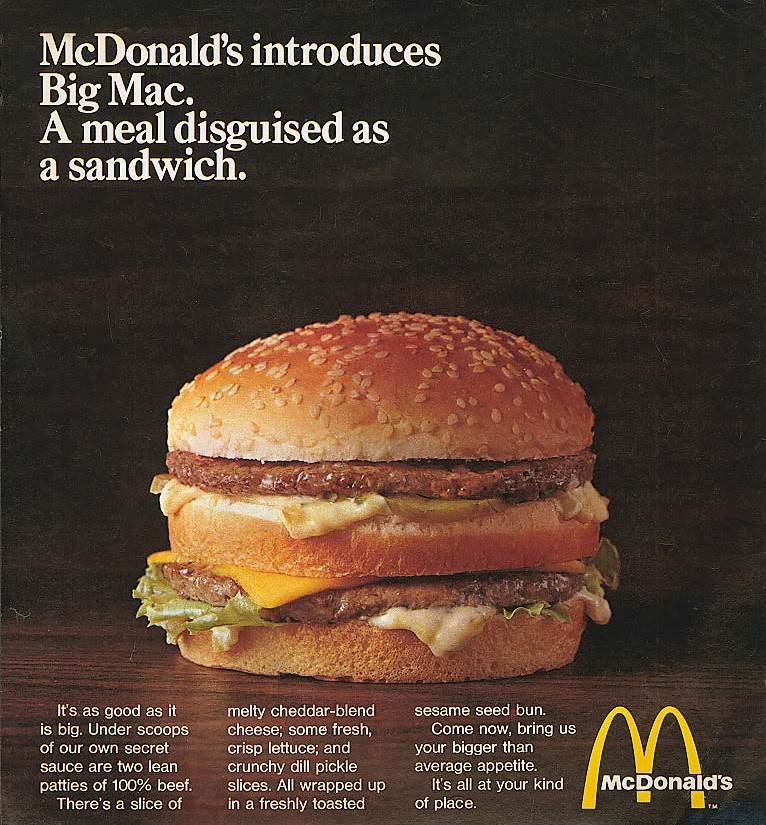
Look at this McDonald's advert:


5) Write a 200 word analysis of the McDonald's advert using preferred, negotiated and oppositional readings.

6) Now find your own advertisement and write a 200 word analysis using preferred, negotiated and oppositional readings.

Extension task: 


Watch the rest of the Plan B TEDx lecture about his plan to help disadvantaged young people through film and music. Do you agree that he presents a positive view of young people?


Finish for homework if you don't complete this during this week's lessons - due next Thursday.


Thursday, 23 November 2017

Audience: How has the internet changed audiences?

This week's work has explored audience power and whether the internet has given audiences more or less power in the media.

This is a crucial media debate and over the course of the GCSE you need to develop your own opinions on these questions. We will be using this particular topic to start developing our essay writing skills in preparation for the longer, high-mark exam questions.

Blog task: audience power essay

Create a new blogpost called 'Audience power essay'. Then, use the following guidance to help you write the essay on your blog:

Essay question: “The internet has given audiences much more power than ever before.” To what extent do you agree with this statement?

Word count: 500-800 words

Optional essay plan
You may find the following useful. However, you do not have to follow it exactly and will be credited for alternative or original responses that are convincing and highly effective.

Introduction (50 words): Thesis Statement (setting out your argument)
  • Introduce the question and how it will be answered. Summarise how the internet has changed the position of the audience (consumer) in relation to the producer. 
  • Explain what your own argument is: do you think that the internet makes the audience more powerful or less powerful and why? 


Music Industry: (150-250 words)
What changes have happened to the music industry since the rise of the internet?

Advantages for audiences:
  • What are some examples of how audiences have benefited from the rise of digital media in the way that they access and consume music? Think about downloading and what platforms users are using to access music. 
  • Think about ‘bedroom bands’ and subscription services such as Spotify and Apple Music. How do these services and opportunities help the audience? 

Disadvantages for audiences:
  • What are the benefits of word of mouth advertising (and re-tweets, shares etc) for the producers? 
  • What might happen to music artists if audiences are unwilling to pay for their music?
  • What are the issues for audiences in having so much content available to them?


Film and TV Industry (150-250 words)
What changes have happened to the film and television industry since the rise of the internet?

Advantages for audiences:
  • What are some examples of how audiences have benefited from the rise of digital media in the way that they access television and film? Think about downloading and new platforms for film and television.  
  • Think about piracy and Apps such as Showbox: what do they offer to the consumer? 
  • What about subscription services such as Netflix and Amazon Prime. How do these services and opportunities help the audience? What content is available to them? What about when they can watch?

Disadvantages for audiences:
  • What potential issues are there with ‘binge-watching’ TV series?
  • How might watching TV shows and films on a small screen (e.g. phone) affect the viewing experience?
  • Why are companies producing less interesting films and TV shows? (E.g. sequels and reboots)


Newspaper Industry (150-250 words)
What changes have happened to the news industry since the rise of the internet?

Advantages for audiences:
  • How has the internet changed the way audiences can access news?
  • What is Citizen Journalism and how has it given the audience more power over reporting and receiving the news?

Disadvantages for audiences: 
  • What is fake news? Why is this a problem for audiences?
  • Are there any problems or concerns with citizen journalism? 


Conclusion (50 words)
  • Have you answered the question with a clear conclusion? Have you demonstrated that the internet makes the audience more powerful or less powerful and why?


Complete this essay for homework - due Thursday 7 December. Remember: the word count MINIMUM is 500 words

Tuesday, 14 November 2017

Audience theory

As well as studying target audience demographics and psychographics, we also need to explore WHY audiences use the media.

Audience theory: key notes and terminology

Passive & Active

Passive: This is the view that audiences passively take in information from the media and that these messages have the same effect on everyone.

Active: This is the more modern and generally accepted view that audiences interact with and make conscious choices regarding the media they consume.


Hypodermic Needle Theory

This is the suggestion that audiences are always passive and therefore take the intended message from the producer as if it was injected into their minds. This assumes no individual difference in audience members. 


Uses and Gratifications - Blumler & Katz

INFORMATION/SURVEILLANCE: learning information that you did not already know or that is useful for living (e.g. documentaries; weather or traffic). 
IDENTITY: personally relating to something - seeing your lifestyle on screen.
DIVERSION/ENTERTAINMENT: escapism and being entertained away from your normal life.
RELATIONSHIPS: social interaction, caring about characters or celebrities, forming relationships e.g watching a soap opera for a long time because you care about what happens to long-standing characters.


Audience theory: blog tasks


Create a new blogpost called ‘Audience Theory’ and complete the following tasks:

1) Write a definition of a passive audience: 

2) Write a definition of an active audience: 

3) Write a definition of the hypodermic needle theory: 

4) Write down a media text for each category of Blumler and Katz's Uses and Gratifications theory and WHY it fits that particular audience use/gratification: 

INFORMATION/SURVEILLANCE:  
 > Why:
IDENTITY:
 > Why:  
DIVERSION/ENTERTAINMENT: 
 > Why:
RELATIONSHIPS:
 > Why: 

5) Re-watch the clip from Blue Planet above and write a paragraph analysing how elements of the clip offer the audience pleasures (use media terminology from Uses and Gratifications theory - notes outlined above). 

Extension: To take this further, select a media text of your own choice, embed it in your blog and write another detailed paragraph analysing the audience pleasures in that product.

Finish for homework if you don't complete it in the lesson - due next Thursday.

Monday, 6 November 2017

Audience: Psychographics

Media institutions are always looking for more detailed audience profiling – so they can target their product more successfully. 

This means they need more than just demographic details - they also want to know about their lifestyles, values and attitudes. One way of classifying these additional details is psychographic profiling.


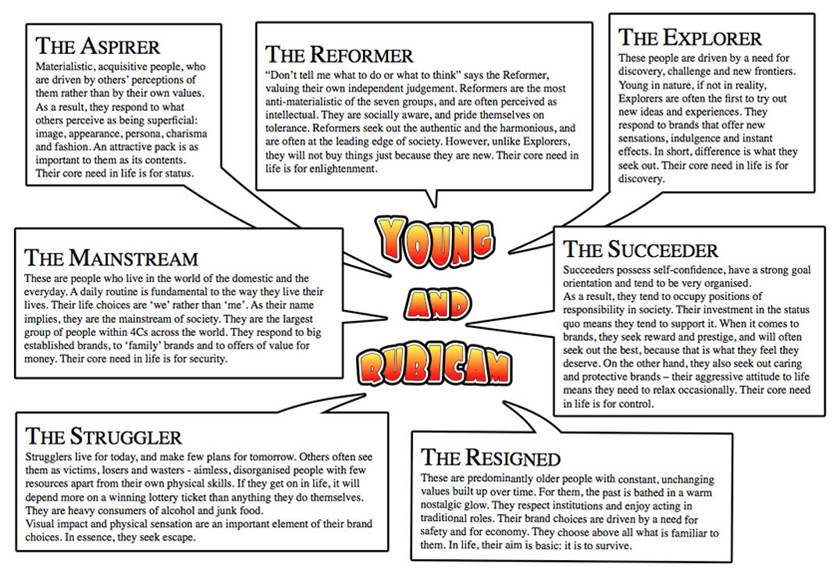
Psychographics

Young and Rubicam invented a successful psychographic profile known as their 4Cs Marketing Model: Cross Cultural Consumer Characterisation.


Resigned
Rigid, strict, authoritarian and chauvinist values, oriented to the past and to Resigned roles. Brand choice stresses safety, familiarity and economy. (Older)

Strugglers
Alienated, Struggler, disorganised - with few resources apart from physical/mechanical skills (e.g. car repair). Heavy consumers of alcohol, junk food and lotteries, also trainers. Brand choice involves impact and sensation.

Mainstreamers
Domestic, conformist, conventional, sentimental, passive, habitual. Part of the mass, favouring big and well-known value for money 'family' brands. Almost invariably the largest 4Cs group.

Aspirers
Materialistic, acquisitive, affiliative, oriented to extrinsics ... image, appearance, charisma, persona and fashion. Attractive packaging more important than quality of contents. (Younger, clerical/sales type occupation)

Succeeders
Strong goal orientation, confidence, work ethic, organisation ... support status quo, stability. Brand choice based on reward, prestige - the very best . Also attracted to 'caring' and protective brands ... stress relief. (Top management)

Explorers
Energy - autonomy, experience, challenge, new frontiers. Brand choice highlights difference, sensation, adventure, indulgence and instant effect - the first to try new brands. (Younger - student)

Reformers
Freedom from restriction, personal growth, social awareness, value for time, independent judgement, tolerance of complexity, anti-materialistic but intolerant of bad taste. Curious and enquiring, support growth of new product categories. Select brands for intrinsic quality, favouring natural simplicity, small is beautiful. (Higher Education).


Photoshop task: Audience Profile

1) Open your Photoshop Audience Profile document and finish the demographic details. 

2) Find images that represent the psychographics (hobbies and interests) of your audience and add these to your document.

3) Add at least 50 words of TEXT to show you understand what categories your target audience falls under e.g. Reformer =

4) Save as a JPEG and upload to a new blog post called ‘My Audience Profile’.

GCSE Media Studies: Coursework

The summer project is a fantastic opportunity to start planning your music video or promotional website. Your summer project contains compu...